Saturday, 16 April 2016

The nature of bushfire

As stated in the introduction my objective is to raise bushfire knowledge and assist Victorians seeking approval to build in a so-called bushfire prone area.

Having regard to the reconstruction bushfire attack levels (BAL) recently imposed on the people of Wye River–Separation Creek, my opinion that the Victorian government and some councils only reinforce bushfire mythology is strengthened.

BAL–FZ and BAL–40 in a Township Zone??? What was the government thinking when it accepted that bushfire attack level assessment or was it a case of "pay the piper and call the tune"?

Why this was done needs consideration, including the adequacy of a risk assessment that should be the basis of the town protection plan, but first some facts about bushfire behaviour — if the community is to challenge government decisions they consider unfair, dictatorial or just require more explanation at least a basic knowledge of bushfire behaviour will help.

Knowledge of bushfire behaviour is also important in deciding whether to stay and defend a property or leave early and risk losing the family home or not being allowed back to deal with ember attack immediately after the fire has lost its intensity — see the pecuniary interest provision in Section 31(4) Country Fire Authority Act 1958.

Fire Triangle

When considering the threat of bushfire it is important to understand how fire occurs and spreads.

Of the three components required to have fire: fuel, oxygen and heat, in the bushfire environment the availability of fuel (vegetation) is the only component of the “triangle” that can be managed to inhibit the spread of fire and reduce its intensity.

I will refer to the availability of “bushfire fuel” as it will affect the threat to a building in the next posting.

Duration of the passage of the fire front – how bushfires spread

To introduce realism when considering the exposure of a building to bushfire it is important to be aware of how long the building will be exposed to an actual fire front.

Basically, bushfire spreads through an environment by flames at the fire front directly igniting fresh fuel (unburnt vegetation) in its path or in the case of a building, fracturing window glass thereby allowing the fire, usually in the form of sparks and embers, to enter the interior of the building, radiation from the fire front sufficiently high enough to ignite fresh fuel, including the exterior of vulnerable buildings due to a low flammability rating of the exposed materials.

The diagram below from Flame temperature and residence time of fires in dry eucalypt forest by B M Wotton, J S Gould, W L McCaw, N P Cheney and S W Taylor, 2011, International Journal of Wildland Fire that published a report on CSIRO Project Vesta, bushfire research in Western Australia that is relevant to Victorian conditions.

The trace in the diagram shows the very limited time that the fire peaks as it passes a given point. The time it takes for the temperature to fall behind the fire front depends on the amount of heavier fuel available to burn out.

Significant in assessing the bushfire threat to the dwelling it is important to understand that a fire only lasts as long as the fuel (vegetation) available to burn — grassland will burn out much faster than forest having a heavy understory of shrubs, ferns, grasses and fallen leaves and twigs.

Ignitability of the fuel is an issue; the fine fuel such as dead fallen leaves, twigs, dry grass and fine dead shrubbery close to the ground generally contribute to the passage of the fire front — the higher relative humidity (atmospheric moisture) and lower temperature that prevail over much of the summer months will inhibit the ignition of fine fuels and subsequent fire development by increasing its moisture content and raising the ignition temperature in a run to the building.

The heavier fuels such as sticks greater than six (6) mm in diameter, fallen branches, logs and hollow trees may be ignited by the fire front but don’t actually contribute to the fire front.

Again, the trace in the diagram above shows the very limited time that the fire peaks as it passes a given point. The time it takes for the temperature to fall behind the fire front depends on the amount of heavier fuel to burn out.

Effect of slope influencing fire intensity at the building site

Slope is a significant influence on fire behaviour. Simply, fire travels upslope faster than over flat ground. Conversely, a fire will be slowed as it traverses a lengthy downslope. The diagram below from Bushfires in Australia, Luke, R.H and McArthur, A.G 1978, Australian Government Publishing Service, Canberra, illustrates the effect of slope on rate of spread of a fire.

Other contributors to bushfire behaviour

Sparks, Embers and Firebrands

The most significant method of fire spread is the ignition of fresh fuel ahead of the main front due to burning wind borne material — known as “spotting”, as in the lighting of “spot fires”. To be a threat, this burning material must be sufficiently light in weight to be carried by wind while continuing to flame or smoulder sufficiently long enough to ignite fresh fuel.

I categorise “spotting” as follows:

Embers

The transmission of light burning or smouldering material generally horizontally above ground out to a distance of 100 metres and usually in the form of burning dead eucalypt leaves and other material of a similar weight picked up off the ground, and possibly the larger forms of grass seed heads or burning stringybark from tree trunks.

Stringybark eucalypts (below), where the bark has not been given a recent “haircut” — singed by fire and leaving the bark tight against the trunk with little or no fine fibres available to be ignited — will shed sparks and embers as fire travels up the bark. In strong wind stringybarks can be a prolific source of embers over a relatively short distance until all the aerated bark has been consumed.

Firebrands

Spotting over greater distances commonly involves the bark from gum species eucalypts. Some of the gum species shed their bark in the form of long ribbons (below). Some of these ribbons hang over higher branches, are relatively light and will burn readily. As they are relatively light they are susceptible to being carried aloft in the convection column — updraft above the fire and remain alight in the column for some time before falling to the ground and starting new fires, sometimes several kilometres distant from the main fire.

In my next posting I will cover how fire entered Wye River–Separation Creek, building loss and the "adequacy" of the township bushfire protection plan.

Meanwhile the the Government ramps up its political damage control and the economic damage to the State continues — now an "expert panel" appointed, so who signed off on accepting the bushfire attack level (BAL) assessment the cause of much distress in the community? And, the economics of the Victorian government's current approach to bushfire management is an important subject in itself.

counter for blogspot

Saturday, 2 April 2016

Australia's bushfire management agencies ... do they deliver value for the dollars we are compelled to contribute?

A paper of relevance by Michael Lonergan as I contemplate the 'financial needs' bleating of the State Premiers at yesterday's COAG meeting and think about the total long term cost associated with the Christmas Day 2015 bushfire that devastated Wye River–Separation Creek.

The failure of the bushfire management agencies to implement an aggressive attack to make safe a lightning strike that should have been a 'bread and butter' issue for DELWP cost and continues to cost Victorians dearly, and not only financially. And what was government's response? A naked attempt to cover up failure due to mismanagement that can easily be seen through.

A case of subterfuge?

Or is there more to it? Was the fire started by the lightning strike seen by the land manager as an opportunity to undertake some fuel reduction burning under the guise of work to make safe a going fire, but not really necessary if an aggressive and well-resourced attack had been mounted on the initially relatively small fire from its very beginning on 19 December?

A disturbing thought given the government bluster over the October 2015 breakaway from the Cobaw Ranges fuel reduction burning undertaken north of Lancefield.

At the time of the fire, fuel reduction burning planned by DELWP for the Otways between Lorne and Wye River–Separation Creek had not been undertaken and maybe the lightning strike fire was seen as an opportunity to sneak in some otherwise contentious fuel reduction burning. Is this what the Victorian government is trying to hide?

And what of their future as the Wye River–Separation Creek community face yet another hardship inflicted on them by the emergency management bureaucracy and the insurance industry?

Where will be next in Victoria to be abandoned to the ravages of bushfire under the 'leave and lose' policy: Lorne, Daylesford, Hepburn, Eltham North–Eltham–Research–North Warrandyte–Warandyte and further south as wind-driven embers from house-to-house spread a fire further south with no one at home to save their homes?

When I hear utterances from the Victorian emergency management bureaucracy about the need for "surge capacity", I think of the costly failure to recognise that a potentially enormous "surge capacity" exists in the form of citizens, who with some training, could safely defend their homes from ember attack that if left unattended grow to cause damage and loss as experienced at Wye River–Separation Creek, Vic. And no doubt the same can be said for Yarloop, WA, in the aftermath of the fire that devastated that community.

Unfortunately, in Victoria, and it seems in Western Australia, the bushfire emergency management authorities prefer to frighten people rather than properly resource and implement an ongoing community partnership-based prevention/mitigation approach to minimising bushfire loss, with emergency response one aspect of a balanced approach to loss prevention. Here, I find the following from Mr Lonergan's paper particularly appealing:

It would recommend to the Federal government what conditions should be placed on funding for the States and Territories for their bushfire administrations. It would achieve the application of Force to bring those administrations to heel.

Food for thought, are the public servants who head up our fire and emergency management agencies and those who are supposed to monitor performance suitably qualified and experienced for the positions they hold? Could they lead firefighters at the fire front to achieve the performance we their clients should be able to expect? If they can't then they should go.

Then there’s the Colac Otway Shire Council and the CFA Board when it comes to neglecting statutory fire prevention responsibilities that increased the threat faced by Wye River–Separation Creek.

More to address at CFA than just internal bullying. Will Minister Garrett be up to this on our behalf?

High time for change folks, and it won't come easily from the fire and emergency services industry or the politicians that industry has in tow.

counter for blogspot

Thursday, 24 March 2016

Bushfire attack levels and windfall financial gains

Thinking more about the fuel burnout that ultimately did not contain a simple lighting strike that eventually went on to devastate Wye River–Separation Creek on Christmas Day and the finding by the Inspector-General for Emergency Management (IGEM) that , "the back-burn strategy was successful in meeting its aim of reducing the fuel loads in the containment lines of the fire", right hand column, page 4 in the Review.

Given the evidence of the result of the breakout that finding by the IGEM is nonsensical. I'm reminded of a saying associated with the American forces in the Vietnam conflict, “the village had to be destroyed to save it”.

In understanding what happened at Wye River–Separation Creek on Christmas Day, there are a number of issues needing consideration that extend much broader than the IGEM’s very limited coverage of his review. Raises an important question, how can we learn from the experience when Minister Garrett sent such a limited brief to the IGEM? Maybe the government knew from the outset that a full exposure could be very embarrassing and selfishly was more concerned to protect itself than allow all of us to learn from the experience.

And the government should be very embarrassed, as it failed the people of Wye River-Separation Creek and continues to fail Victorians in falling far short of efficient and effective bushfire management to minimise all forms of loss.

For a start, I’ve already learned from discussion with three Wye River property owners that certain insurers are imposing bushfire attack level assessments of BAL–40 within the township area. I’m certain of one of those assessments, due to a client of mine requesting that I challenge the insurer, in this case for a dwelling designed and constructed to BAL–29 on the high side of Karingal Drive, Wye River that is still there and virtually unaffected by the fire — despite the close-by adjoining dwelling burning to the ground.

Above is a BAL–29 dwelling on the uphill side of Karingal Drive that survived the fire due to the meticulous approach of the architect and builders in complying with the requirements of ASA 3959 Construction of buildings in bushfire–prone areas, and the diligence of the owner in maintaining the land around the dwelling according to a defendable space specification to support BAL–29.

The remains of the dwelling next door on the northern side that burned to the ground — note the unburnt tree canopies in the background.

A polyethylene water tank melted to the water line by the heat from the burning dwelling next door, but the building remained intact.

"Melted to the water line" is a significant observation of the performance of polyethylene water tanks that I'll expand on in a future posting, as the CFA's one-size-fits-all approach to the Bushfire Management Overlay excludes polyethylene water tanks, apparently with any consideration of how they actually perform in a bushfire situation. One example of unnecessary additional cost imposed on people already hard pressed with the cost of building a new home that deserves an individualised performance-based analysis of the actual bushfire threat.

If the council met its township protection responsibilities there should be no need for a bushfire attack level to exceed BAL–29 and probably be lower further inside the town boundary, where ignitions from ember attack will be the predominant cause of new outbreaks of fire. More about how fire entered Wye River–Separation Creek in a future posting.

Bushfire attack level assessments

Coming back to the bushfire attack assessment at BAL–40, and I'm aware of BAL–FZ assessments prior to the fire, and "windfall gains".

My earlier reference to a BAL–40 assessment on my client’s dwelling that survived the fire was done by a consultant based in Sydney who was commissioned by a building consultant based further north in NSW.

Examination of the photos with the assessment certificate suggests that the assessor did not visit the land, but relied on photographs taken from Karingal Drive and downhill from the land involved.

It is to be hoped that the Wye River–Separation Creek Resettlement Leadership Group is bringing some common sense and integrity to bushfire protection requirements for rebuilds and new dwellings, given earlier work commissioned by the Colac Otway Shire and funded by the Victorian government that "painted Wye River–Separation Creek residential areas red" in the draft report issued in February 2014. Fond hope?

Financial gain

It can be argued that the Colac Otway Shire Council failing to meet its township bushfire protection responsibilities substantially led to the fire entering and spreading within Wye River-Separation Creek and the resulting loss of homes and other assets.

Who benefits from the loss, the Victorian government through an increase in the fire services levy and the Colac Otway Shire Council through an increase in council rates, both based on an increase in the “capital improved value" (CIV) of the land?

Then there will be the architects, builders and building materials suppliers. Maybe there will be others in on the potential for gain not mentioned here.

Examination of the Fire Services Levy document reveals how the levy is calculated and what the levy funds. By now people reading my blog postings should be aware of my strong advocacy for a proper risk assessment based PPRR approach to minimising loss due to bushfire.

Concerning the levy, questions needs to be asked, are we receiving full value for the impost or is it being squandered by the government? The Fire Services Levy affects all Victorians and any increase will further hurt those citizens already experiencing financial hardship.

I wonder if the bureaucrats responsible for the Wye River–Separation Creek debacle have performance bonuses in their contracts and if so how performance is measured.

Opinion on how the fire actually entered and spread within Wye River–Separation Creek is the subject of future post. This knowledge is important in determining the bushfire attack levels for replacement or new buildings, rather than someone "counting trees".

Impact on citizens

What will be the increased costs and other hardships faced by citizens wanting to live in Wye River–Separation Creek, some of whom had retired there and lost their homes in the fire? Will they have the wherewith all to reestablish or will they be forced out?

While the government boasts that no lives were lost, the loss of 116 homes and other assets is inexcusable and an appalling failure of bushfire management in Victoria.

counter for blogspot

Sunday, 13 March 2016

Bushfire mythology — the demise of bushfire knowledge and the price we pay as a consequence

Back in February 2014 I commenced this blog with the objective of contributing to the raising of bushfire knowledge and assisting Victorians seeking approval to build in a bushfire prone area. At that time I was of the opinion that the Victorian government and some municipal councils were only reinforcing bushfire mythology, neglecting their fire prevention responsibilities and failing to implement a proper risk assessment based PPRR approach to managing bushfire.

While continuing to consider the “Review of the initial response to the 2015 Wye River-Jamieson Track fire” by the Inspector-General for Emergency Management it’s become obvious that a lack of bushfire behaviour knowledge is seriously inhibiting our ability to prevent loss.

I've already begun to express my opinion on the worth of the “review" in my blog posting on Sunday, 28 February 2016 and Saturday, 5 March 2016 and question the qualifications of the Inspector-General for Emergency Management to carry out the review.

Promotion of the government's "Leave early and Live" policy is deeply flawed in that it urges people to leave their homes and business and risk losing them, but does not tell them why other than if they stay they'll likely end up dead!

At the top of the on-line "Leave early and Live" page:

Leave early

The decision about when to leave is the most important decision you will make. Check the Fire Danger Rating (FDR) for your location every day. When the FDR reaches your trigger point, you need to activate your plan.

The government then promotes its Fire Danger Rating system as a means of the community informing itself about the level of fire danger in their area.

At the top of the on-line "Fire Danger Ratings" page:

About Fire Danger Ratings

The Fire Danger Rating tells you how dangerous a fire would be if one started.

It helps you to know when conditions are dangerous enough to put your bushfire survival plan in to action.

Ratings are forecast using Bureau of Meteorology data for up to four days in advance, based on weather and other environmental conditions such as fuel load.

The rating is your prompt to take action to stay safe.

But nowhere is there advice for the public about "how dangerous a fire would be if one started" and what to expect when it arrives — many people place their trust in the government for factual advice on how to deal with bushfire and to leave them uninformed is irresponsible.

My Thursday, 13 March 2014 posting "Understanding the fire danger rating system" was devoted to explaining the rating system used across Australia.

Amongst other matters covered in the posting, the following explanation:

The Fire Danger Rating system is graduated according to the FDI:

Rating                                       FDI

Code Red                                 100 +
Extreme                                   75 – 100
Severe                                     50 – 75
Very High                                 25 – 50
High                                         12 – 25
Low – Moderate                         0 – 12

And on it goes. Further on-line information from the CFA "Stay aware of the Fire Danger Rating and know what to do." Note the information alongside "Very High", "High" and "Low–Moderate".

In a story "Bushfire-proof houses burn down in Wye River and Separation Creek as experts cast serious doubt on effectiveness of building standards" published in the 25 February edition of The Age, the Emergency Management Commissioner is quoted:

A fire in Wye River of that intensity or higher would have taken the whole town out. To lose 116 is a loss, but if they had of lost 334 houses that would have been a total loss. They lost a third of the building stock in the most difficult part of the town.

What did the Emergency Management Commissioner mean with the comment "A fire in Wye River of that intensity"?

Examination of the weather recorded just up the road at the BOM Aireys Inlet recording station on Christmas Day reveals that the Fire Danger Index only reached 50 once during the day. In the column headed "Fire" it can be seen that the FDI sat within High or lower on CFA's "Stay aware of the Fire Danger Rating and know what to do." advice.

How many homes of permanent residents of Wye River–Separation Creek could have been saved if those people had been advised well in advance of the day of the fire on what to expect and how to defend their homes, rather than being urged to leave town?

The scope of loss due to bushfire is well-covered in this ABC News story "What we lose to the flames–The true cost of bushfires to our community." be it Wye River–Separation Creek, Lorne, Daylesford, or Yarloop, WA.

We should and can do much better than this when it comes to bushfire management, but reforming emergency management arrangements as advocated in Natural Disasters in Australia: Reforming mitigation, relief and recovery arrangements is not helped by the Victorian government's attitude, given the Emergency Management Commissioner's comment quoted in The Age story, which seems to advocate that every level of bushfire requires people to flee.

Food for thought, has the government hitched itself to the right star?

counter for blogspot

Saturday, 5 March 2016

Cover-ups, Ministers, pacemakers and tokenism

Continuing on from my 28 February posting “… the potential folly of judging a book by its cover”, I’m still wary of how much credibility as a taxpayer, fire service levy contributor, purchaser of house and contents insurance — part of the fee finding its way into a risk pool — and generally a concerned Australian, I should give the Wye River–Separation Creek fire review.

In assessing the importance of the review I’ve taken into account the terms of reference established by Minister Garrett in her undated letter stamped as received by the Inspector General for Emergency Management on 5 January 2016 and found on page 45 of the review as Appendix 1.

From the outset, I have been concerned that there was an attempt by the Victorian government to cover-up the circumstances leading to the Christmas Day devastation of Wye River–Separation Creek. I know this to be opinion shared by others in the community, hence requests to the Coroner to conduct an investigation. Fortunately, and unlike Western Australia, there is provision in the Coroners Act 2008 for a “person” to request that a coroner investigate a fire.

Interesting, who drafted the Minister’s letter of request to the IGEM? There are issues raised in the request that would have required a good knowledge of the administrative part of fire management of the Wye River–Separation Creek fire, examples being dot points 2 and 3

Having watched several media briefings by the Emergency Management Commissioner during the aftermath of the Christmas Day fire I noticed Minister Garrett standing mute off to the side of the Commissioner. As Ms Garrett did not take a lead role in the briefings, which custom and experience see Ministers leading such a briefing and answering questions if only to build a media profile, it begged the question, is the Minister fully across her important emergency management responsibilities sufficient to be able to prepare such a specific request of the IGEM?

I can’t imagine Federal Ministers Michaelia Cash or Marise Payne standing back while a public servant delivered an important briefing or Tania Plibersek or Jenny Macklin for that matter. Causes me to wonder about Premier Andrews' criteria for appointing Ministers.

Who then drafted the letter of request, the Emergency Management Commissioner? Regardless of who advised on or drafted the letter for Minister Garrett, it's reasonable to assume that it would have been done from within the bureaucracy of government or its political advisers and with politically self-serving motives.

Looking forward to seeing Minister Garrett on ABC TV's Q&A explaining Victoria's bushfire emergency management arrangements and the government's response to the Productivity Commission report on "prevention/mitigation, preparedness, response and recovery", a subject deserving of discussion in a later blog posting.

Then there is the COAG report Natural Disasters in Australia: Reforming mitigation, relief and recovery arrangements published in 2004. Notable in the Executive Summary:

A New Approach

Central to the new approach is a systematic and widespread national process of disaster risk assessments and, most importantly, a fundamental shift in focus towards cost-effective, evidence-based disaster mitigation. This represents an historic move beyond disaster response and reaction, towards anticipation and mitigation.

I'd be interested to hear Minister Garrett explain Victoria's position on the COAG reform paper, particularly bringing some balance to the current lopsided approach to bushfire management in Victoria.

BUSHFIRE EMERGENCY MANAGEMENT IN VICTORIA

In my 28 February posting I briefly pondered the “knowledge and experience” the community should be entitled to expect of the IGEM in undertaking this review. A review that must be fundamental to guaranteeing efficient and effective performance in the life or death environment of bushfire emergency management, and not just a CYA activity by the government.

Prevention, Preparedness, Response and Recovery

Emergency Management Act 1986

There are several references to the PPRR concept in the Emergency Management Act 1986 including this reference to the Minister:

5 Role of Minister

(1) The role of the Minister is to ensure that satisfactory emergency management arrangements are in place to facilitate the prevention of, response to and recovery from emergencies.

Emergency Management Manual Victoria

More emphasis is given to the PPRR approach to emergency management in the Emergency Management Manual Victoria for example under the heading 1.1 Introduction:

Emergency management involves the plans, structures and arrangements which are established to bring together the endeavours of government, voluntary and private organisations and communities in a comprehensive and coordinated way to deal with the whole spectrum of emergency needs, including prevention, response and recovery.

And, under the heading 1.3 Concepts and Objectives

Prevention, Response and Recovery

The objectives of the 1986 Act (s. 4A) are to ensure that the following components of emergency management are organised to facilitate planning, preparedness, operational coordination and community participation:

Prevention: the elimination or reduction of the incidence or severity of emergencies and the mitigation of their effects.

Response: the combating of emergencies and the provision of rescue and immediate relief services.

Recovery: the assisting of people and communities affected by emergencies to achieve a proper and effective level of functioning.

And, under the heading Objectives of the Arrangements

Be integrated, (involve all people and relevant agencies)

The management of emergencies is a shared responsibility involving many people and organisations in the community. It is not something done by one sector of the community to or for the rest of society, although some organisations have specialist roles.

In addition to the emergency services, all government departments have some role to play. The emergency response role may be a minor part of their responsibilities. However, many departments have an essential prevention responsibility. Examples include land use planning, occupational health and safety, clean water, public health and building regulations. These are part of the prevention component.

Municipal councils have essential roles in emergency management, including the preparation and maintenance of municipal emergency management plans, provision of relief and recovery services and supporting emergency response operations.

Voluntary organisations such as Red Cross, St John Ambulance, WICEN and search and rescue organisations play well-defined roles in emergency management.

Private sector organisations are often involved when their services and resources are needed for prevention, response or recovery activities, or where emergencies affect their buildings, equipment, personnel, suppliers or customers. In particular, essential service providers (for example, producers and distributors of electricity or gas) are expected to ensure that they can maintain continuity of supply.

Members of the community are also responsible for taking preventative, protective and restorative actions in their own and the community’s best interests.

The two paragraphs above are highlighted in red to focus attention on the statutory prevention responsibilities of the Municipal Fire Prevention Officer (MFPO) Colac Otway Shire Council and the CFA for static protection of the township area of Wye River–Separation Creek.

My Sunday, 21 February posting “Obfuscation, sanitising, cabinet-in-confidence documents, burying, leaking — examples of some of the processes of government” shows an example of the failure of the Colac Otway MFPO to use the hazard removal power to protect the houses further up the hill in Dunoon Road, many of which were lost when the fire ignited the land shown in the photograph.

Surf Coast Shire Council

Another example of the failure of those with hazard mitigation responsibilities is the vulnerability of houses in the Surf Coast Shire, examples being Eastern View below:

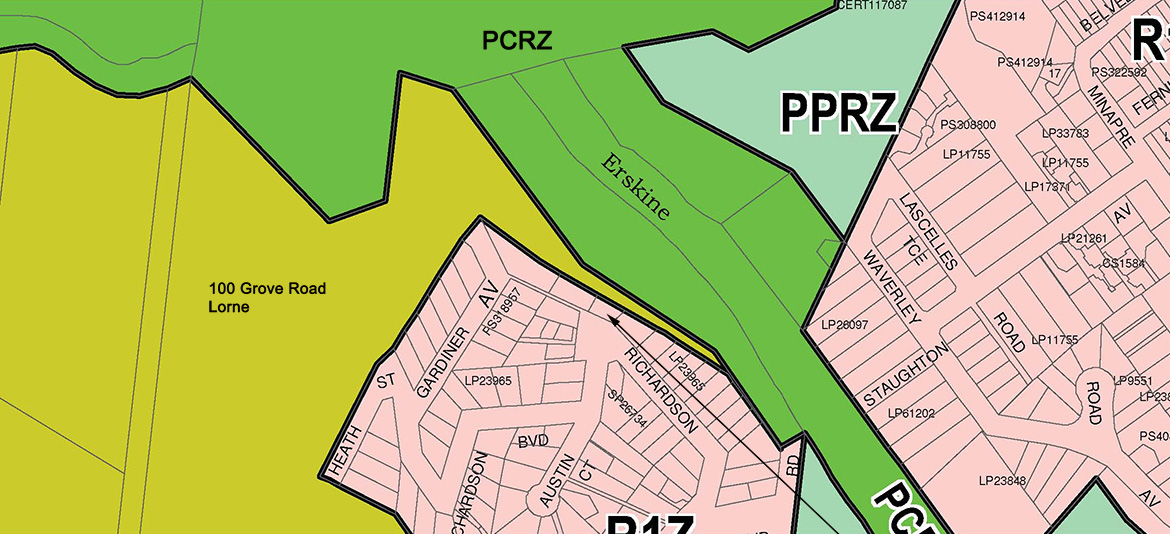
and in Lorne behind the houses on the northern side of Richardson Boulevard and abutting a caravan park further down the Erskine River (below):

and onto the caravan park further downstream:

People from the CFA Chief Officer's head office Fire & Emergency Management Team have been aware of the threats to Wye River and Lorne for several years. Begs the question, did those people bring it to the attention of then Chief Officer Ferguson? And a further question, did Chief Officer Ferguson have in place a procedure for situations such as the two above examples, where he would arrange the serving of hazard removal notices? And finally, did Chief Officer Ferguson have in place a procedure to remove the hazard in the event of a failure to comply with a notice?

DELWP

I've not yet mentioned DELWP's responsibility for the public land behind the the houses in Richardson Boulevard, Lorne. Failed the people of Wye River–Separation Creek and failing the people of Lorne.

Having regard to the responsibilities of the IGEM and Emergency Management Victoria, and considering the performance of the CFA and the shires of Colac Otway and Surf Coast, for personal survival reasons alone it may have been prudent of Minister Garrett to commission an independent public Inquiry, as was the response to the earlier Lancefield fire.

Makes me wonder, is the Minister only ancillary to emergency management arrangements in Victoria? Again from the Emergency Management Act 1986:

5 Role of Minister

(1) The role of the Minister is to ensure that satisfactory emergency management arrangements are in place to facilitate the prevention of, response to and recovery from emergencies.

Finally, in preparing this blog posting I'm reminded of the following quote from C.S.Lewis' The Srewtape Letters:

“I live in the Managerial Age, in a world of "Admin." The greatest evil is not now done in those sordid "dens of crime" that Dickens loved to paint. It is not done even in concentration camps and labour camps. In those we see its final result. But it is conceived and ordered (moved, seconded, carried, and minuted) in clean, carpeted, warmed and well-lighted offices, by quiet men with white collars and cut fingernails and smooth-shaven cheeks who do not need to raise their voices. Hence, naturally enough, my symbol for Hell is something like the bureaucracy of a police state or the office of a thoroughly nasty business concern."

counter for blogspot

Sunday, 28 February 2016

Review of the initial response to the 2015 Wye River-Jamieson Track fire — the potential folly of judging a book by its cover

On Thursday, 25 February, I posted the link to the Inspector–General for Emergency Management’s “Review of the initial response to the 2015 Wye River-Jamieson Track fire" (click here) with the comment that I was going to study it before commenting.

One of my interests is military history of certain eras and there are books I see from their covers that attract my attention. However, before I spend money and time on a book, I always check on the author and the reliability of the critics.

Before getting too deeply into the IGEMs review, I decided to check on the bona fides of the author and the reliability of the critics.

The review document

What knowledge and experience, particularly on-the-ground hands-on firefighting experience, should be expected of the author of such a review? Does the reviewer have that knowledge and experience?

How did the reviewer gather the information on which to base the work? Were all the "key players" interviewed and down to what level in the hierarchy of management did the review reach? Was the reviewer satisfied that the contributors spoke freely or openly or did they exhibit signs that they felt themselves constrained by concerns over career prospects or felt vulnerable when looking back over their actions and advice they gave during the firefight?

The critics

From their utterances reported in the media the Minister for Emergency Services and the Emergency Management Commissioner are leading critics of the review document.

What actual knowledge and hands-on experience of the subject do they possess — there seems to be some some confusion over the difference between steeply sloping terrain and a “gorge”, fire intensity Christmas Day and gaps in the knowledge of the availability of specialist on-the-ground firefighting capability in Victoria and across Australia (click here)?

Reference material

To learn more about the Office of the IGEM I’ve begun to study its web page (click here), including some of its reports (click here) and the Emergency Management Act (click here).

To date, analysing the reference materials is leading me to conclude that the government has a narrow view of bushfire emergency management in Victoria. For example, who monitors the performance of municipalities in satisfactorily meeting their town and settlement bushfire protection obligations and the performance of the CFA in meeting its fire prevention responsibilities? So far from my brief examination of the work of the Office of the IGEM that does not seem high on its agenda.

PPRR

Whatever happened to a risk assessment based approach to fully integrated Prevention, Preparedness, Response and Recovery to bushfire emergency management?

Attempting to calm the the citizens of Victoria, many now unnerved because of the "leave and lose" bushfire survival policy, government boasts an armada of 53 aircraft to protect us. The reliance on so many aircraft at the response stage of a PPRR approach is an indicator of failure at the prevention and community preparedness stages of emergency management.

Fifty-three aircraft, up to the size of a McDonnell Douglas DC 10 that UPS uses for its international airfreight service! Yet, the Minister for Emergency Services, Emergency Management Commissioner and the Inspector–General for Emergency Management are all adamant that air attack was of little value as part of the initial response to the lightning strike due to the fire being in a "gorge" and dense tree canopy preventing the suppressing agent reaching the ground.

Does the Victorian government understand the limitations on air attack in Victoria?

Considering the retaining and flying costs involved with the large fixed wing aircraft alone, and consequently the enormous sum of money expended, would redirection of some of this money to risk assessment based bushfire “prevention” — including a full-time fire service responsible for specialist fire management on public land that would include year round readiness to undertake fuel reduction burning as the many “windows of opportunity” present on a daily basis somewhere in Victoria — and community “preparedness” achieve a better return on investment? I believe it would.

Some examples of the work done post Ash Wednesday 1983 that recommended a shift to what we now know as PPRR and preceding the 2009 Victorian bushfires and those that followed, including the devastation of Wye River–Separation Creek on Christmas Day 2015.

The first speaks for itself with two recommendations relating to “mitigation and preparedness" (click here).

The following should have been the start of a significant step forward into risk assessment based PPRR, with Foreword by Alan Hodges, AM, Director General, Emergency Management Australia (click here).

Finally, a national bushfire preparedness strategy, again with Foreword by Alan Hodges, AM, Director General, Emergency Management Australia (click here).

The first dot point on page 3 of the Executive Summary (click here) is worth noting when considering the efficacy of the current bushfire “leave and lose” policy of the Victorian government in a broader loss reduction context.

Incidentally, the cover photograph is a bushfire near Esperense, WA, February 1991. Has anything changed there?

Having considered the role and responsibilities of the Office of Inspector–General for Emergency Management and some of its work to ensure the protection of Victorians from bushfire it’s reasonable to ask, are EMV and IGEM “birds of a feather… “ and this review a case of “Caesar judging Caesar”?

To conclude, considering the work done from the lessons learned post-Ash Wednesday, there's an old adage, "if we don't learn from history we are doomed to repeat it". How many times has that been the situation since February 1983?

counter for blogspot

Thursday, 25 February 2016

Review of the initial response to the 2015 Wye River-Jamieson Track fire

The Inspector-General for Emergency Management's report produced and issued by the Governnment of Victoria is now available (click here) for those interested.

I will study the report before commenting as I consider appropriate.

counter for blogspot